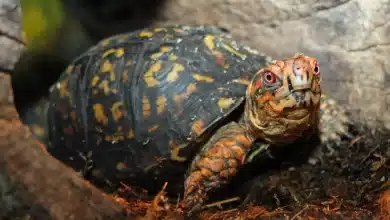
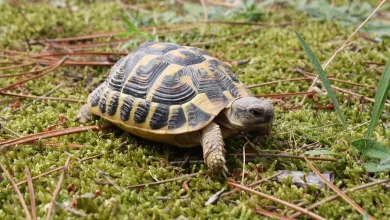
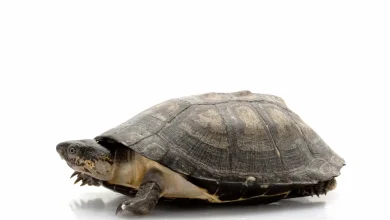
Box turtles have unfortunately seen better days in the wild. Various factors, most of them human-related such as exports for the pet trade and loss of habitat are causing the population of box turtles to dwindle. Because of this, it’s important to know about the threat and what we can do to reverse it.
Table of Contents
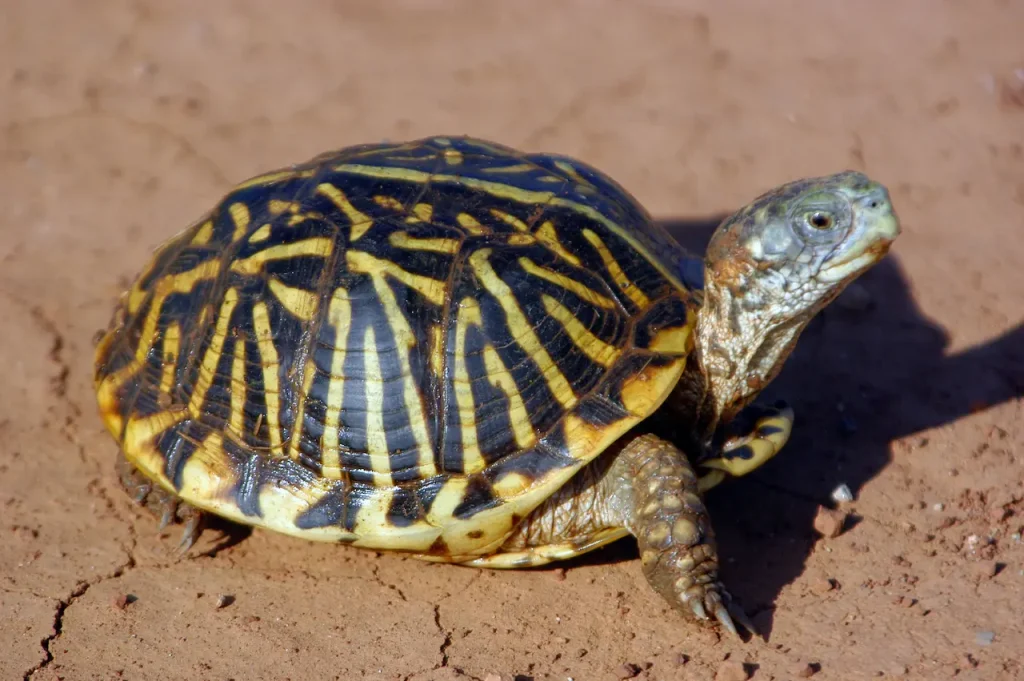
Most Threatened Species/Subspecies
Some species and subspecies of box turtle have not been studied very heavily, but it is possible that the Coahuilan (Aquatic) box turtle, is the most endangered American box turtle. Several Asian box turtles are near extinction or already extinct in the wild.
Even the most common box turtle, the Eastern box turtle, is officially classified as “vulnerable.”
Some box turtles require more study before their endangered status can be determined, such as the Spotted box turtle. Only a low number of these turtles have ever been found spread across a large distribution area.
Ways Individuals Can Harm Box Turtles
First and foremost; humans need to learn how their actions can inadvertently harm box turtles. You see, Box turtles existed fine without us for a very, very long time. The best thing we can do to help is to stop interfering in negative ways; this alone will make a huge difference.
The first thing to understand is that box turtles have a profoundly strong connection to the location they are born. They rarely travel far from where they were hatched. Once they form a connection to these surroundings, they stay there for the duration of their life (if allowed).
Removing a wild box turtle from their home causes stress for them. Box turtles that were born in the wild and were later put into captivity tend to have a much shorter life span. Worse than this; some people take box turtles from their homes and then release them elsewhere into the wild. Box turtles will not simply settle down in a new location if moved. More often than not, they will wander; hopelessly trying to find their old home until they die. It’s not too uncommon for humans to take in box turtles for a few weeks, and then later decide to let them go. It’s best never to remove a box turtle from their home unless you have a good reason. And if you return them to the wild, it must be in the same spot you took them from.
If you want a box turtle as a pet, it is recommended that you always buy one that was bred in captivity to begin with. Giving money to people who capture them from the wild only encourages them to keep doing it.
A study in Louisiana found that 30,000 box turtles were taken from the wild over 41 months. It’s believed that half of all box turtles taken from the wild quickly die due to poor living conditions and during transport.
If you do take a box turtle as a pet (preferably one bred in captivity) do plenty of research in advance to know exactly what its needs are. This website is a great place to start. Another great resource to follow is Reptile. Guide. The experts at Reptile. Guide specializes in not only creating care information about turtles, but other reptiles as well, such as snakes, lizards, and even tortoises.
As a whole, box turtles are a bit harder to care for than dogs or cats because they haven’t been as domesticated yet. You owe it to your turtle to be a good owner. Don’t just wing it; do your homework.
Beyond that, you can help box turtles by following basic common courtesy towards nature. Never litter when you’re out camping (or at all, really).
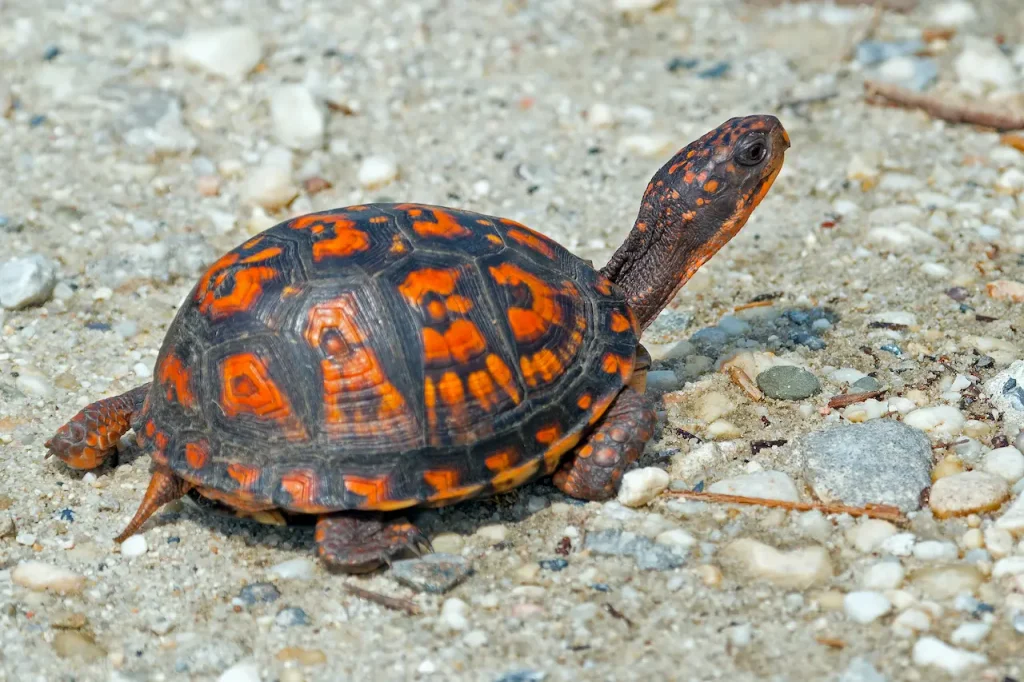
What You Can Do to Help
Box turtles tend to thrive best when we just leave them alone. That being said, there are some situations in which you can help them.
One such example is if you find a box turtle crossing a road. This is a slow process for them, and they often get hit. If you feel you can help them in a manner that is safe for both yourself and other drivers; you can save their life by moving them out of the road.
If you live in an area with a lot of wild box turtles, keep an eye out for them on the road so you don’t hit them yourself.
Occasionally, people will discover that box turtles have started nesting in their backyard. Turtle eggs can be an easy target for predators like raccoons, but you can help protect them. Turtle nests can be safeguarded quite easily with a dome of chicken wire. Just make sure that there are some two-inch gaps at the base of the structure. These gaps will be large enough that the hatchlings can easily slip through them; so the hatchlings can leave the nest but no predators can enter it. You may form a connection to these hatchlings by the time they come out. Resist the urge to keep them as pets, even briefly.
If you have turtles on your property there are some things you can do to make the habitat as favorable as possible to them. This includes leaving leaf litter and fallen woody debris on the ground (at least in some areas and if forested areas), to avoid burning large areas during peak activity times for turtles and thoroughly check your yard before mowing or burning brush piles. You can read more about how to create a more suitable habitat for box turtles here.
If you have pets, make sure that they don’t interfere with the nest.
You can also help box turtles by spreading information. People need to know that they can accidentally kill a box turtle as easily as by picking it up, showing it to their camping buddies; and setting it down in a different place than they found it.
Organizations
Many organizations help protect box turtles; most of them are locally based and deal with protecting the box turtles within their area. You can quickly check online to see if there are any in your area.
Box turtle research is being conducted by professionals, but they do need help from volunteers sometimes. A common task given to volunteers is to find and safely secure box turtles that you find in the wild. They will then have you bring in the specimen, at which point they will be tagged by a professional. The turtle will then be released back into the wild, in the same place it was taken from.
By tagging and releasing turtles, scientists can monitor them and get a better idea of how they can be saved.
Local organizations may also have other simple tasks for you, such as signing petitions to help prevent exporting North American box turtles from their homes or using them as food.
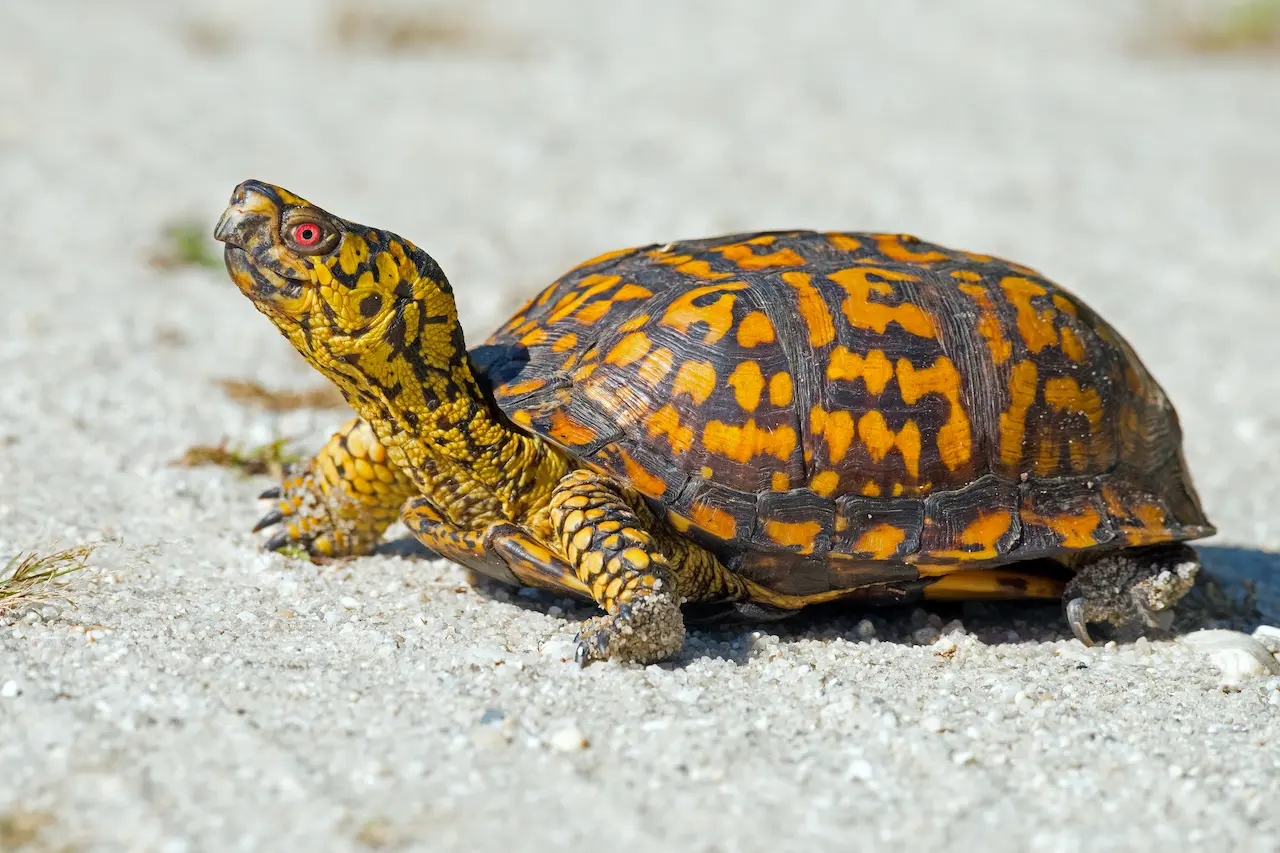
What the IUCN listing actually means
Terrapene carolina, the common box turtle, has been listed as Vulnerable on the IUCN Red List since 2011. The other species in the genus carry varied listings: T. coahuila is Endangered (and arguably should be Critically Endangered, given current habitat trends), T. nelsoni is Data Deficient, T. ornata is Near Threatened, and the recently elevated T. mexicana requires reassessment under its current taxonomy.
“Vulnerable” means the species faces a high risk of extinction in the wild over the medium term unless current trends reverse. For long-lived, slow-reproducing animals like box turtles, the listing reflects a decline that may not be visible to a casual observer year to year but that, projected forward, is genuinely alarming. The current IUCN Red List assessment has the methodology and underlying data.
The five main pressures on wild populations
1. Habitat fragmentation and loss
Box turtles have small home ranges (often 1–3 hectares for adults) and strong site fidelity. They do not relocate well, do not handle suburban development well, and do not cross large roads safely. Every new subdivision, every new road, every new agricultural conversion in box turtle range removes habitat or splits a continuous population into smaller, more isolated subpopulations that are more vulnerable to local extinction events.
2. Road mortality
Adult female box turtles travel further than males during the nesting season, and they cross roads to do it. Road mortality therefore disproportionately removes breeding females from the population, which has outsized demographic consequences. Some peer-reviewed work suggests that even moderate road mortality (a few females per kilometre per year) is enough to drive long-term population decline.
3. Illegal collection for the pet trade
Wild collection of Terrapene is illegal across most of the United States but continues, particularly via international export channels. Adult box turtles collected from the wild rarely thrive in captivity (high stress, husbandry challenges, parasite loads), often die within a year, and their removal damages the source population permanently. Box Turtles’ editorial position has not changed: do not buy wild-caught box turtles, do not collect from the wild, and report suspected illegal trade to the relevant authority.
4. Disease
Ranavirus and herpesvirus outbreaks have hit wild and captive Terrapene populations in recent decades, sometimes with very high mortality. The disease ecology is complicated, but human-mediated introduction (released captives, intermixing wild populations across watersheds) is implicated as a driver in several documented outbreaks.
5. Climate change
Long-term shifts in temperature, precipitation, and seasonal timing change the brumation cycle, the egg-laying window, the nest temperature, and the food base. Sex determination in Terrapene is temperature-dependent, which means even small shifts in nest temperatures can skew the sex ratio of an entire cohort. Modelling work suggests several Florida bauri populations are already producing female-biased clutches at levels that could compromise long-term viability.
What individual keepers can actually do
“Keep a turtle, save the species” is not a real strategy — there is no captive-breeding pipeline back to wild restoration for any North American Terrapene. But individual keepers can still contribute:
- Source ethically. Captive-bred animals from documented sources, never wild-caught, never imported animals of uncertain origin.
- Don’t release. Box turtles you cannot keep should go to a reputable rescue or rehabilitation centre. Wild release of captive animals introduces disease, mixes genetics inappropriately, and usually kills the released animal.
- Don’t relocate wild animals. A box turtle moved more than a few hundred metres from where it was found will spend the rest of its life trying to get back, and usually fails. Cross a turtle off a road in the direction it was heading; do not take it home, do not move it to “better” habitat.
- Support habitat protection. Local land trusts, state herpetological societies, and a small number of regional conservation groups are doing the unglamorous work of protecting box turtle range. They take donations and volunteers.
- Report wild observations. Most US states have a herp atlas project or a citizen-science platform (HerpMapper, iNaturalist) that uses keeper observations to track distribution and decline.
- Help with road mortality. If you live near box turtle habitat and you see one on the road, pull over safely and move it across in the direction it was already going. Do not turn it around. Do not relocate it.
The IUCN listing isn’t the whole picture
The 2011 IUCN assessment used the best data available at the time. Several lines of subsequent work — long-term mark-recapture studies in Maryland, North Carolina, and Indiana, the Massachusetts Audubon Society’s box turtle program, and Florida Fish & Wildlife’s bauri monitoring — suggest population declines that, in some regions, exceed what the IUCN listing reflects. The reassessment cycle for chelonians is slow, and the conservation status of several species likely understates current pressure.
Where to read next
- Box Turtle Care — captive husbandry done well reduces wild pressure
- North American box turtles — the species overview
- The 2013 Terrapene taxonomic revision — species-level conservation needs accurate names
- Box Turtle Health Problems — keepers who recognise disease early reduce captive-to-wild disease transfer
If you’re aware of a specific conservation project that should be on this site, write in via the contact page — Hannah keeps the field-program list.