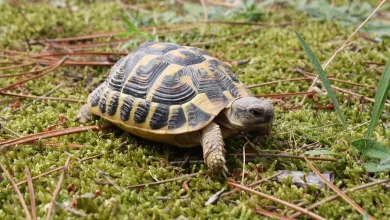
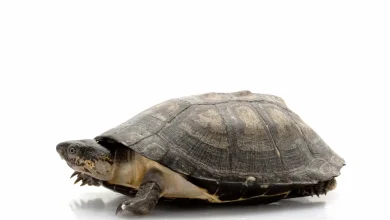
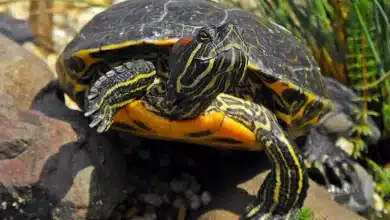
The honest answer to “how long do box turtles live?” is: nobody really knows the upper bound, because well-kept box turtles outlive the keepers who started keeping them. Forty years in captivity is normal. Sixty is well documented. Eighty-plus has been claimed for marked wild animals on long-running mark-recapture studies. If you are about to take on a box turtle, you should plan for a forty-to-fifty-year commitment — and write that animal into your will. This is the long version of what we actually know about box turtle longevity, why they live so long, and what that means for keepers.
By Maya, with longevity-data references checked by Hannah against current mark-recapture literature.
Table of Contents
The headline numbers
- Median lifespan in the wild: Adult Terrapene carolina in well-protected habitat live 25–35 years. Many adults exceed this; many never reach adulthood at all.
- Median lifespan in captivity: A well-kept box turtle should reach 35–50 years. Many will exceed that range. This is the planning horizon you should use.
- Maximum documented in the wild: 80+ years for a small number of marked animals in long-term studies. Some claims of 100+ years exist in older literature but are not consistently supported.
- Maximum reported in captivity: Verified accounts of captive Terrapene exceeding 80 years exist, with anecdotal reports of older animals that are harder to verify.
- First-year wild mortality: Catastrophically high — likely well over 90% of hatchlings do not survive their first year in the wild. This is the demographic feature that makes the species so vulnerable to additional pressure.
Why box turtles live so long
Long life in turtles is not unusual at the genus or family level — most chelonians are long-lived. The mechanisms that make this possible cluster around a small set of biological features:
- Slow metabolism. Ectothermic animals running cool, slow biochemistry accumulate metabolic damage more slowly than mammals running hot.
- Effective predator defence. The hinged plastron means adult Terrapene have very few natural predators that can break through the closed shell. Adult mortality is correspondingly low.
- Negligible reproductive senescence. Female box turtles can lay viable clutches well into their fifties and sixties. Many vertebrate lineages see fertility drop sharply with age; chelonians largely don’t.
- Telomere biology. The cellular ageing machinery in chelonians appears to operate differently from mammals, with slower telomere shortening and more effective DNA repair across the lifespan. This is an active research area.
- Continuous growth. Many turtles keep growing slowly throughout life, with cellular turnover patterns that differ from mammals.
The combination produces an animal whose risk of dying from internal causes (cancer, organ failure, age-related infection) rises much more slowly than ours does. Most wild adult box turtle deaths are external — road, predator, habitat-driven starvation, weather event — rather than from age-related disease.
What the long lifespan means for keepers
You are signing up for a 40-year commitment
This is the most important sentence on this page. If you are 25 when you acquire a hatchling, that animal is statistically likely to outlive your relationship with your current partner, your current address, your current city, and possibly your current career. If you are 60, that animal will outlive you. Both of those facts have practical consequences.
- Write the turtle into your will. Name a backup keeper. Discuss it with them in advance and write it down. We say this on every consultation we do.
- Maintain transferrable records. Acquisition documentation, vet history, diet log, weight log, photographs over time. A future keeper inheriting your turtle should be able to read its life history in your records.
- Plan for moves, divorces, and life transitions. Box turtles do not relocate well. Every major life change should include a planned arrangement for the animal.
- Don’t acquire a hatchling if you cannot commit to forty years. Adoption of an adult animal from a rescue is a shorter, often more honest commitment.
The vet relationship is long-term too
Your exotic vet will probably change at least once over your turtle’s life. That’s normal. Maintain documentation that travels with the animal. Annual wellness exams build a history that the next vet can read; ad-hoc emergency visits do not.
Multi-generational keeping is real
We know multiple families where a box turtle was acquired by a parent and is now being kept by their adult child. We know one case where the keeper is the third generation. This is not unusual, and it is the framing the species deserves.
The species differences
Longevity varies somewhat across Terrapene:
- Eastern (T. c. carolina): the best-documented longevity, with 40–60 years routine in captivity and 80+ documented in some wild populations.
- Florida (T. c. bauri): similar potential, with wild population data thinner than for Eastern.
- Gulf Coast (T. c. major): longevity data is thinner but no reason to expect significantly shorter lives.
- Three-Toed / Mexican (T. mexicana): well-documented captive lifespan of 40+ years; wild data confounded by recent taxonomic revision.
- Ornate (T. ornata): wild lifespan likely 20–35 years in good prairie habitat; captive lifespan can reach 40–50 years with excellent care.
- Coahuilan (T. coahuila): captive lifespan data limited; the species’s narrow habitat and current decline make wild longevity figures unreliable.
- Asian Cuora: wide species variation. Best-kept long-lived Cuora in captivity routinely exceed 30 years; some species likely 50+ with excellent husbandry.
What kills captive box turtles too soon
If a captive box turtle dies before 30 years old, the cause is almost always one of:
- Chronic husbandry deficiency. Long-term inadequate UVB, dehydration, or diet imbalance — what kills most pet-shop-starter-kit animals over 10–15 years.
- Mismanaged hibernation. Unstable cold-room temperatures, undermined fasting protocols, or hibernating an underweight animal. See our hibernation cornerstone.
- Predator attack. Outdoor enclosure with inadequate top, raccoon access, dog access.
- Drowning. Water dish too deep, pool with no haul-out, exhausted hatchling.
- Escape and prolonged exposure. Outdoor enclosure without buried walls, indoor enclosure without a lid.
- Untreated illness. Respiratory infection that progressed because the keeper didn’t recognise it; aural abscess; dystocia. See our health cornerstone.
- Trauma from being stepped on. Free-roaming a box turtle in a busy household — surprisingly common, almost always preventable.
Of these, the chronic husbandry deficiency category is the slow killer. The acute categories (predator, drowning, trauma) usually take an otherwise healthy animal. The husbandry deficiencies take animals years before they actually die — most “sudden” box turtle deaths in captivity are the visible endpoint of slow accumulating damage.
What we actually do to maximise lifespan
Our standing protocol across the colony:
- Annual vet wellness exam, every animal, no exceptions
- Faecal float every 6–12 months
- UVB tube replacement every 12 months from the install date written on the tube
- Weekly weighing with logged trend data
- Weekly visual health check (see our health cornerstone for the checklist)
- Photographic records (date-stamped, comparable over years)
- Pre-hibernation vet exam for any animal we intend to brumate
- Diet variety enforced — no animal eats the same ten foods on rotation; we deliberately introduce new safe items
- Outdoor access during warm months for every animal that can have it
- Replacement keepers identified in writing
The data we wish existed
The biggest gap in our understanding of Terrapene longevity is the missing middle — between the institutional zoo records (which favour a small number of animals living in unusual conditions) and the wild mark-recapture studies (which favour adult animals in protected habitat). Captive longevity in private keeping, at scale, with reliable cause-of-death data, is largely undocumented. Most private keepers neither publish records nor contribute to longitudinal data collection.
If you keep box turtles and you have decade-plus records, those records are scientifically valuable. Consider sharing them with your state herpetological society, with the Turtle Conservancy, or with a researcher who is studying captive chelonian welfare. The data is rare and useful.
The reframe
Box turtles are not the species you take on for an undergraduate room or a brief enthusiasm. They are the species you take on if you are willing to share four-plus decades of your life with an animal whose own life will outlast many of your circumstances. Done right, that is one of the more rewarding things a keeper can do. Done casually, it ends badly for the turtle.
If you have read this far and you are now reconsidering the hatchling you were about to buy: that is a healthy reaction. Consider adopting an adult animal from a reputable rescue instead. The animals are usually older, often well-socialised to handling, and the time commitment is more honest.
Further reading on Box Turtles
- Box Turtle Care — the umbrella husbandry guide
- Box Turtle Enclosure Setup
- Box Turtle Diet
- Box Turtle Health Problems & Vet Care
- Box Turtle Hibernation Guide
- UVB & Lighting
- Box Turtle Conservation — wild longevity is helped by captive keepers making ethical choices
External references
- IUCN Red List — current conservation status, which affects wild longevity prospects
- ARAV — find a reptile vet who can support a 40-year keeping commitment