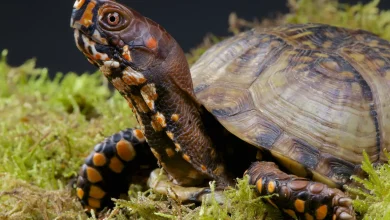
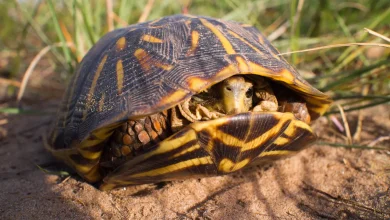
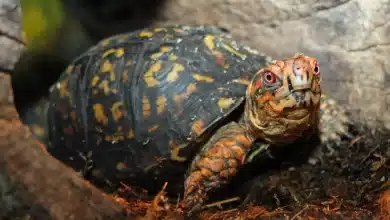
A box turtle enclosure is not a tank. It is not a “habitat kit”. It is a small piece of woodland, marsh edge, or arid scrub — depending on which species you keep — built indoors or outdoors at a scale your turtle can actually live in. This is the long version of how we build them, what the non‑negotiable dimensions and materials are, and the specific mistakes that kill the most box turtles we see in rehab and clinic. We have built thirty‑plus enclosures over the past decade between the four of us, and what follows is what we actually do.
By Maya, with veterinary checks from Ben and outdoor‑predator notes from Hannah.
Table of Contents
The single rule that matters most
Box turtles need space, gradient, and choice. The enclosure has to be big enough that the turtle can walk for at least 10–15 seconds in a straight line. It needs a thermal gradient (warm end, cool end). It needs a humidity gradient (damp end, dry end). It needs hiding cover, open ground, water, and substrate deep enough to dig in. If any of those are missing, the animal cannot regulate its own physiology, and you will be fighting a slow welfare problem for the rest of its life.
Glass aquaria, plastic tubs under 1.2 m long, and the pre‑built “starter kits” sold by big‑box pet stores do not meet this rule for an adult Terrapene. They are why most pet box turtles die young. This is the part of the article we will keep coming back to.
Outdoor first, indoor second
If your climate allows it, every box turtle keeper we know prefers outdoor enclosures. Box turtles evolved outdoors. Real sun, real humidity, real soil, real seasonal cues, real invertebrate forage — none of these can be matched indoors. An outdoor pen is also usually cheaper to build than a comparably sized indoor enclosure, and it cleans itself with the help of rain and resident isopods.
Indoor enclosures are still the answer for winter months in cold climates, for hatchlings, for sick or recovering animals, and for the months either side of brumation. We end up running both — a full outdoor pen from spring through autumn, and an indoor table for the cool months.
Outdoor pen — the build we actually use
Minimum footprint
For one adult box turtle: 1.8 m × 1.2 m of floor area is the absolute floor. We treat that as a “you can keep a turtle alive” minimum. For two animals, double the floor, never share the same minimum between two turtles. A 2.4 m × 1.8 m pen for a pair is roughly where we start being happy. Bigger is always better, full stop.
Walls
We build wooden walls 50–60 cm above ground, with the bottom 20–25 cm buried below ground. Box turtles dig. We have lost two animals in our own care over the years to under‑built walls, and we built the next pen to match the depth of the deepest known box turtle escape attempt we could find a record of. Bury the wall. The buried section should turn outward by ~10 cm at the bottom to deter undermining.
Wood: untreated cedar, redwood, or kiln‑dried pine. Avoid pressure‑treated lumber (the copper compounds are not animal‑safe in direct contact). Avoid CCA‑treated wood entirely — older lumber may contain arsenic.
Lid (yes, always)
Half the people we know who do not put lids on outdoor pens have lost animals. The other half have not lost animals yet. Predators that take box turtles in our experience: raccoons (top of the list), coyotes, foxes, dogs, cats, hawks (for hatchlings), crows, ravens, rats (for hatchlings and eggs), wandering humans (especially in front gardens). Galvanised hardware cloth (1.3 cm mesh) on a hinged frame, covering the entire pen. Not chicken wire — raccoons open chicken wire. Hardware cloth.
Substrate
For North American Terrapene: a 15–20 cm layer of topsoil and leaf litter, ideally with a chunky compost component for moisture retention. Avoid playsand (too dry, dusty), avoid pure peat (acidic), avoid coco coir on its own (it dries fast and turns dusty). Plant the pen heavily — native grasses, hostas (yes, they will eat some of them), low ferns, edible weeds. Living plants improve humidity, give cover, and feed the resident invertebrates that feed the turtle.
Water
A shallow water dish or pond, sunk into the substrate so the turtle can walk in and out without help. Depth: enough to cover the top of the carapace when the turtle stands in it, no more. Box turtles can drown in deep water, especially the smaller and more terrestrial subspecies. Change the water daily — they will defecate in it.
Hides
Plural. Always. At least two on the cool end, one on the warm end. Half‑logs, large pieces of cork bark, half‑buried clay pots, dense vegetation. Box turtles spend more of their day under cover than in the open; if your pen does not have visible hides your turtle is stressed.
Sun, shade, and the gradient
The pen needs a section that gets direct morning sun, and a section that is shaded for most of the day. Most box turtles bask in the morning and retreat to cover from late morning through afternoon. If your pen is entirely sunny, plant or build shade. If your pen is entirely shaded, move it.
Hibernaculum
For climates cold enough to brumate outdoors safely (and only some are — see our hibernation guide), the pen needs a hibernaculum. A 60+ cm deep pit, lined with hardware cloth on the sides to keep rodents out, packed with leaf litter and loose substrate. Many keepers prefer a controlled indoor brumation regardless of climate, for safety. We do.
Indoor enclosure — the build we actually use
Footprint
For one adult Terrapene: 1.2 m × 0.6 m floor area, minimum. We strongly prefer 1.8 m × 0.9 m or larger. Glass aquaria do not work — they are too small in floor area for the height they offer, and clear walls stress box turtles, which do not understand glass and pace.
Use a “turtle table” — an open‑topped wooden box with solid walls 30 cm tall. We line ours with PVC sheet on the inside to make cleaning easier and to stop substrate moisture rotting the wood. You can also use stock tanks (galvanised farm troughs) or a custom melamine build.
Substrate
Indoors: a mix of organic topsoil, leaf litter, and play‑grade orchid bark, 12–15 cm deep, kept damp on one half and drier on the other. Spot‑clean daily, replace fully every 3–4 months. Cypress mulch is acceptable as an addition but should not be the entire substrate (too acidic on its own). Avoid pine and cedar shavings entirely — both contain volatile aromatic compounds that are bad for chelonian respiratory tracts.
Lighting
Full‑spectrum UVB across roughly two‑thirds of the enclosure: a T5 HO 6% UVB tube (Arcadia or Zoo Med ReptiSun 5.0 or 6%), mounted 25–30 cm above basking level with no mesh or glass between the tube and the turtle. Basking light: a separate halogen flood bulb generating a clear 32–35°C surface temperature at the basking spot. Twelve‑hour daily photoperiod, with seasonal adjustment by 30–60 minutes either side of solstice. See our UVB and lighting cornerstone for the long version of this.
Heat
Ambient room temperature 21–24°C minimum. Basking spot 32–35°C surface. Cool end 21–24°C. Night drop to 18–21°C is fine and probably beneficial. Don’t use overhead ceramic heat emitters as primary daytime heat — they are useful as night supplementary heat in cold rooms but they do not produce the spot temperatures basking turtles need. Avoid under‑tank heat pads for box turtles entirely; they heat substrate from below in a way that confuses thermoregulation and can burn an animal that buries down.
Humidity
Most North American Terrapene: 60–80% ambient with one consistently damp end. Florida box turtles: 70–85%. Desert/Ornate box turtles: 50–70%, somewhat drier. Mist the damp end daily; if you can read a 40% humidity reading on a calibrated digital hygrometer anywhere in the enclosure, you are too dry. Don’t trust the dial‑gauge hygrometers that come in pet‑store kits — they are typically 15–25% off.
Water
Same rule as outdoors — shallow, walkable, daily changes. Carapace‑deep maximum. We use heavy ceramic dog water dishes set into the substrate.
Hides
Two minimum, ideally three. One on the warm end, one on the cool end, one mid‑gradient. Half‑logs, cork bark, large overturned terracotta saucers. A turtle that does not have a hide on the warm end will avoid thermoregulating to its preferred body temperature, which has knock‑on effects on digestion and immunity.
Species‑specific tweaks
Eastern (T. c. carolina)
Standard build above. Humidity 70%, leaf litter and damp soil. Tolerates outdoor keeping across most of the eastern US.
Florida (T. c. bauri)
Higher humidity (75–85%), warmer ambient (24–27°C indoors), no cold tolerance — outdoor keeping only in genuinely subtropical climates. Florida bauri are not winter‑hardy outside Florida and the southern Gulf states.
Gulf Coast (T. c. major)
The biggest Terrapene. Increase footprint accordingly. High humidity, swampy substrate, deeper water dish. Strong swimmers — supervise.
Three‑Toed / Mexican (Terrapene mexicana)
Slightly more arid tolerance than Eastern. 60–70% humidity. Strong basking light.
Ornate (T. ornata)
The grassland specialist. 50–60% ambient humidity, sandy‑loam substrate (not pure sand), more open ground, less forest litter, stronger basking light, lower ambient at night. Outdoor keeping suits them well in temperate continental climates.
Asian box turtles (Cuora spp.)
Most Cuora are semi‑aquatic and require setups closer to an aquatic turtle setup with a haulout, not a North American Terrapene setup. Read species‑specific care for any Cuora — they are emphatically not the same animal as a North American box turtle.
Things we have stopped doing
- Glass aquaria. Stress, inadequate floor area, ventilation problems. We never use them.
- Calcium sand. Sold for reptiles, dangerous when ingested, especially for small or stressed animals.
- “Coil” UVB bulbs. Even the better ones have inadequate output for box turtles. T5 HO tubes only.
- Heat rocks. Burn animals. Never used.
- Pine and cedar shavings. Respiratory irritants.
Cleaning, maintenance, and what to expect
Daily: change water, spot‑clean visible waste, check basking and ambient temps, eyeball the turtle for behaviour change. Weekly: rinse and refill water dish completely, check substrate moisture across the gradient, mist any dry spots. Monthly: deeper substrate turn, replace surface litter, weigh the turtle. Every 12 months: replace UVB tube even if it still lights up. Every 3–4 months indoors: full substrate replacement.
Cost reality check
A proper indoor box turtle enclosure costs in the range of USD 250–500 to build from scratch, depending on size and whether you build the wooden table yourself. UVB and basking lights are about USD 80–120 of that. Substrate, hides, plants, and a decent hygrometer add another USD 50–80. The “starter kit” sold in pet stores is usually a USD 150 setup that is not adequate, and we strongly recommend skipping it.
Further reading on Box Turtles
- Box Turtle Care — the umbrella husbandry overview
- UVB & Lighting for Box Turtles — the full lighting cornerstone
- Box Turtle Diet — what to feed and what to avoid
- Hibernating Box Turtles
External primary references
- US Fish & Wildlife species database — for legal status of Terrapene species before you acquire one
- IUCN Red List — current conservation status for the genus
If you are about to build a pen and want a sanity check, Maya is the right person to email — write in via the contact page, ideally with a sketch.